
South Carolina Family Court Records
South Carolina family court records are public documents maintained by the clerk of court in each of the state's 46 counties. The Family Court handles divorce, child custody, child support, adoption, and other domestic matters. You can search these case files online through the South Carolina Judicial Branch at sccourts.org, or visit any county courthouse in person. The state's public access portal covers all 46 counties and gives free access to case summaries, party names, filing dates, and case status for family court cases across South Carolina.
South Carolina Family Court Records Quick Facts
The South Carolina Family Court System
South Carolina established a uniform statewide Family Court in 1976. Before that, domestic matters were handled in different courts across counties. The unified system created one court type with the same rules and procedures across all 46 counties. Each county has its own Family Court that holds case records for cases filed there. South Carolina organizes its courts into 16 judicial circuits, and each circuit has at least two resident Family Court judges.
Judges in South Carolina's Family Court are elected. The General Assembly votes jointly to elect Family Court judges to six-year terms. This is different from many other states where governors appoint judges. The election method means local lawmakers have a say in who serves on the bench in each circuit. Once elected, a judge may sit in any county within their circuit and may be assigned elsewhere as needed.
The SC Judicial Branch website at sccourts.org serves as the main gateway for online access to family court records across all 46 counties. The South Carolina Judicial Branch at sccourts.org provides the central access point for all court records statewide.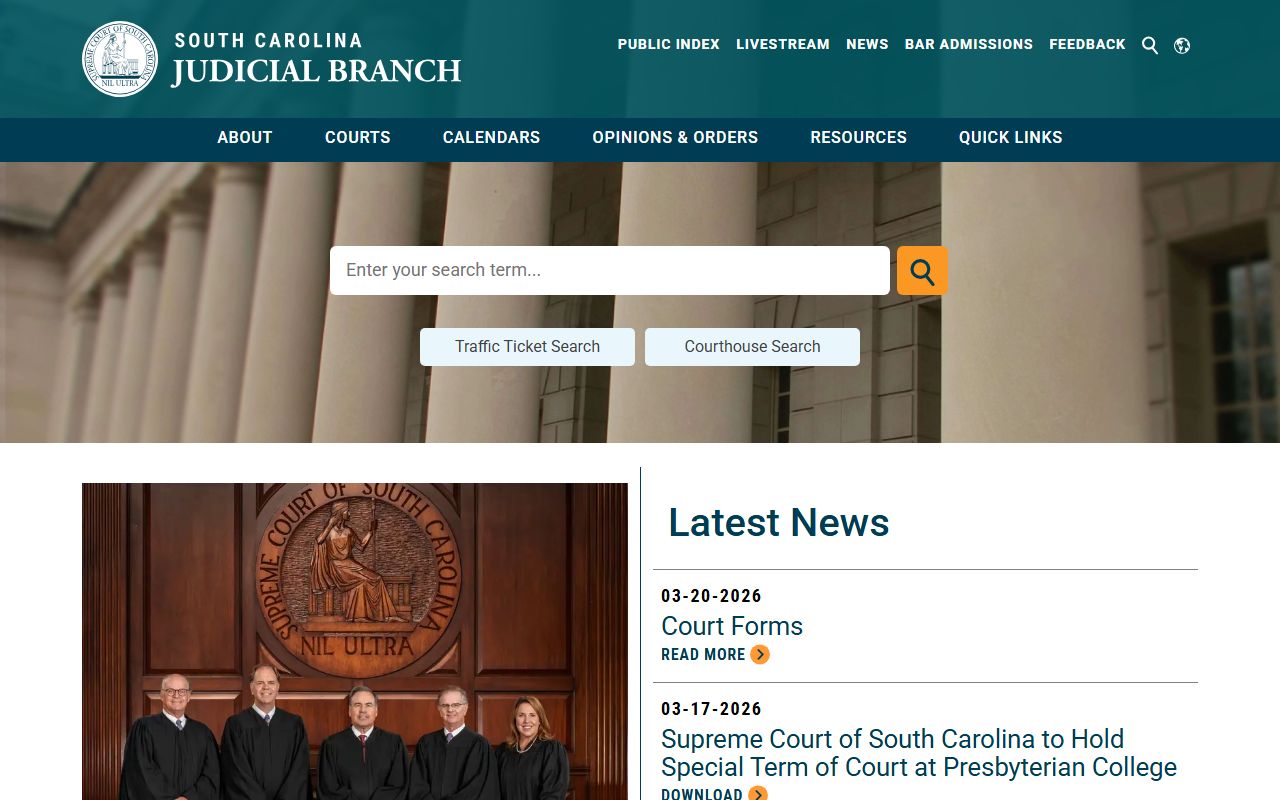 The site gives users links to county public index portals, court forms, and general information about family court proceedings in South Carolina.
South Carolina Family Court has exclusive jurisdiction over a wide set of domestic matters. The court handles divorce, legal separation, annulment, alimony, and the division of marital property. It also covers child custody, child support, visitation rights, adoption, name changes, and the termination of parental rights. In addition, the Family Court has exclusive jurisdiction over minors under the age of 18 who are alleged to have violated state law, with the exception of traffic and fish and game violations. Serious criminal charges may be transferred to Circuit Court when appropriate.
Note: South Carolina Family Court records are governed by S.C. Code Ann. § 63-3-530, which defines the full scope of the court's jurisdiction over domestic and juvenile matters.
How to Search SC Family Court Records Online
The South Carolina Judicial Branch runs a free public case records search at sccourts.org/case-records-search. To use it, click the link for the county where the case was filed. This takes you to that county's Public Index site. You must accept a disclaimer before the search tools appear. From there, you can search by case number, party name, CDR code, or date range. Your browser must have cookies and JavaScript turned on for the portal to work.
Once you find a case, the Public Index shows the case summary, which includes the case number, case type, current status, disposition, filing date, and the name of the assigned judge. You can also see the list of parties, any charges filed, sentencing details, case actions, financial information, and judgment records. This level of detail is available for free without creating an account. As of January 1, 2026, home address information is no longer shown on the public index to protect privacy.
The SC Judicial Branch family court official page explains the types of cases the court handles and links to related resources. The South Carolina Family Court official page outlines the court's jurisdiction and case types.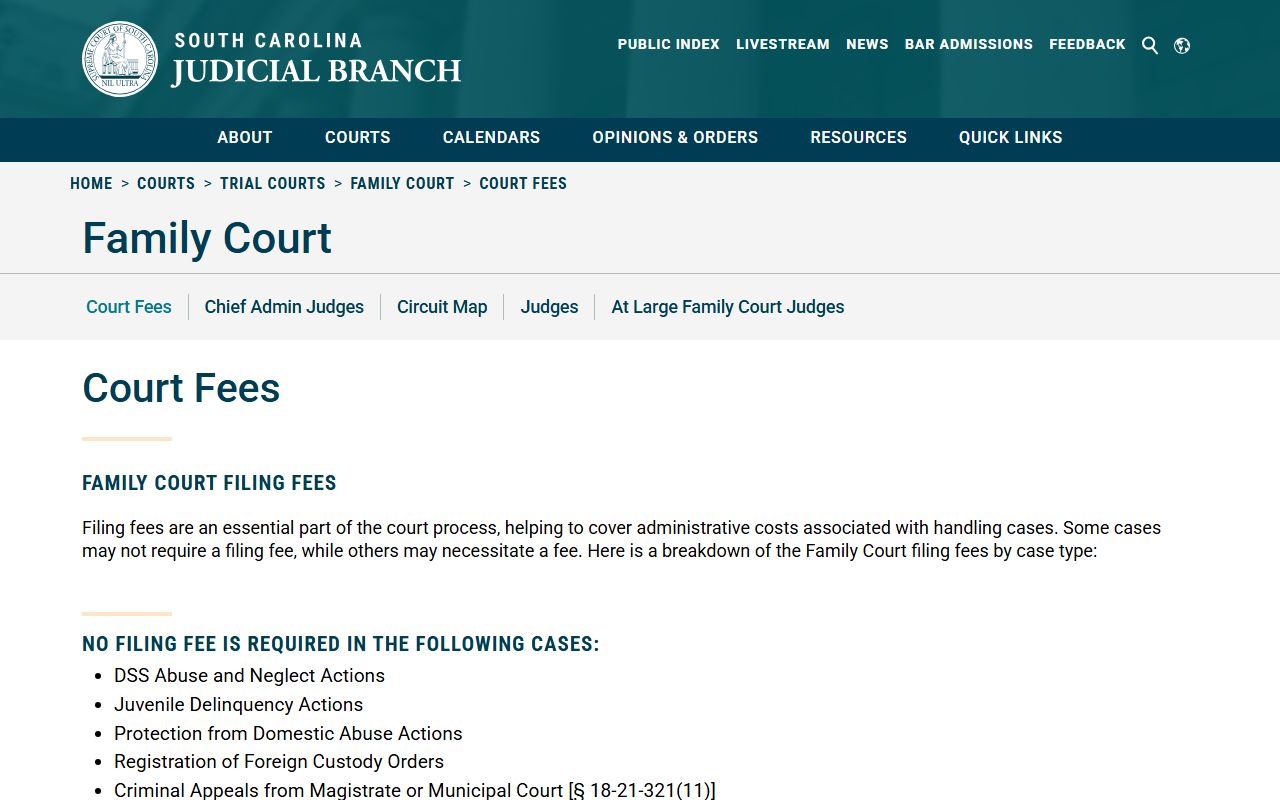 The page also links to the Family Court Case Management System public access portal, which provides direct access to case dockets and filings statewide.
SC Family Court Records: Appellate Case Access
When a Family Court case is appealed, it moves to either the South Carolina Court of Appeals or the South Carolina Supreme Court. These higher court case records are available through a separate portal. The C-Track Public Access system at sccourts.org/c-track-public-access provides case information for both appellate courts. It is free to use and available to the public.
The C-Track Public Access portal at sccourts.org gives the public free online access to appellate court case information in South Carolina. The C-Track Public Access portal provides appellate court case information for South Carolina.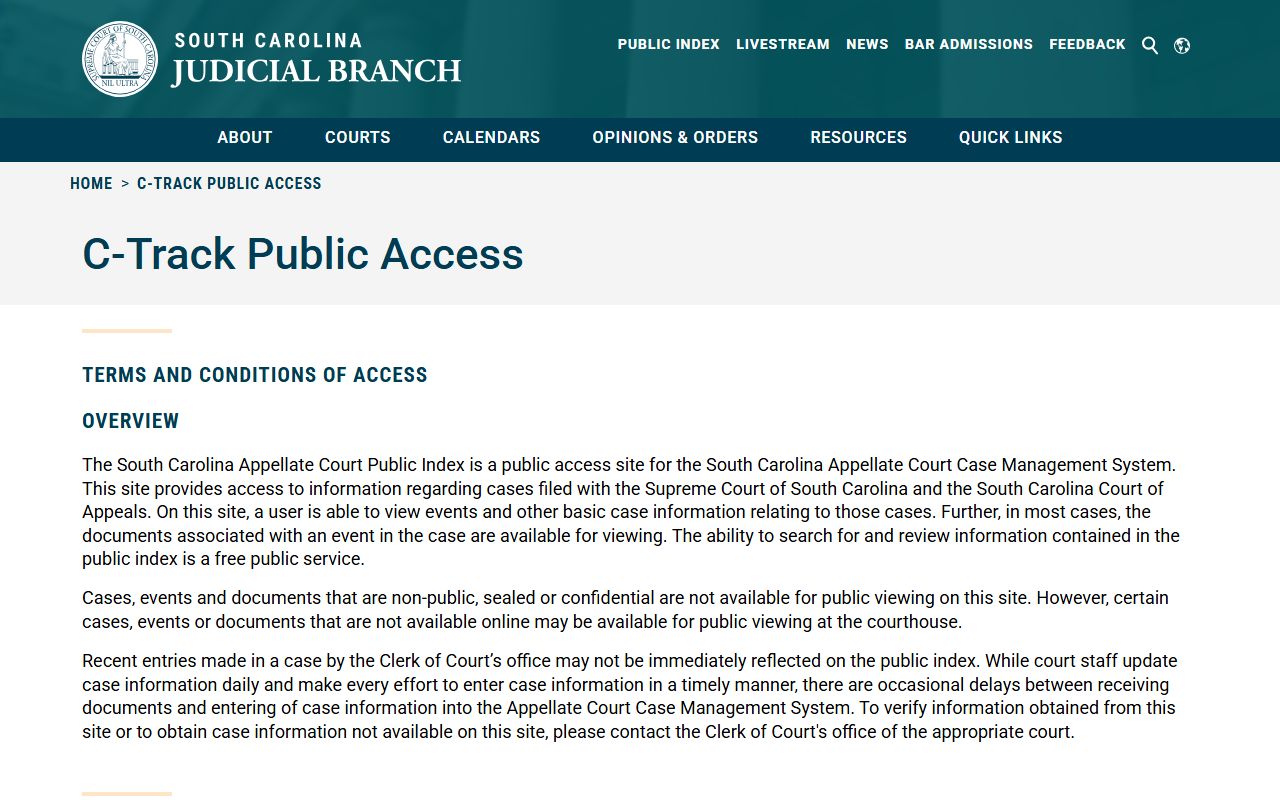 Users can search appellate court case filings, review docket entries, and track the progress of family court cases that have been appealed to higher courts in South Carolina.
South Carolina Family Court Filing Fees
South Carolina Family Court charges set filing fees for most case types. The standard fee for many case categories is $150. This applies to divorce and annulment filings, separate support and maintenance actions, child custody and visitation cases, child support actions (including college expense and alimony claims), name changes, adoptions, paternity cases, post-dissolution equitable distribution, and non-DSS termination of parental rights. You pay this fee when you file the initial paperwork with the clerk of court in your county.
Several types of family court cases do not require a filing fee in South Carolina. DSS abuse and neglect actions carry no fee. Juvenile delinquency actions are also free to file. Protection from Domestic Abuse petitions are not subject to any filing fee. Registration of foreign custody orders does not cost anything. Registration of foreign divorce decrees has a $100 fee, but this fee is waived if the decree also addresses custody or child support. These fee exemptions help ensure that vulnerable parties can access the courts without financial barriers.
Note: Fee amounts are set by the General Assembly and may change, so confirm current fees with the clerk of court before filing in South Carolina.
SC Family Court Forms and Self-Help Resources
The South Carolina Judicial Branch provides official Family Court forms for free download at sccourts.org/court-forms. The forms page is organized by case type and covers the full range of Family Court matters. Available form categories include adoption, child support enforcement, child support modification, child support termination and continuation, divorce and separation, domestic violence and orders of protection, name change, paternity, termination of parental rights, and visitation.
The SC Judicial Branch court forms page provides official Family Court forms for download at no cost to filers across all 46 counties. The SC Judicial Branch court forms page provides official Family Court forms for download.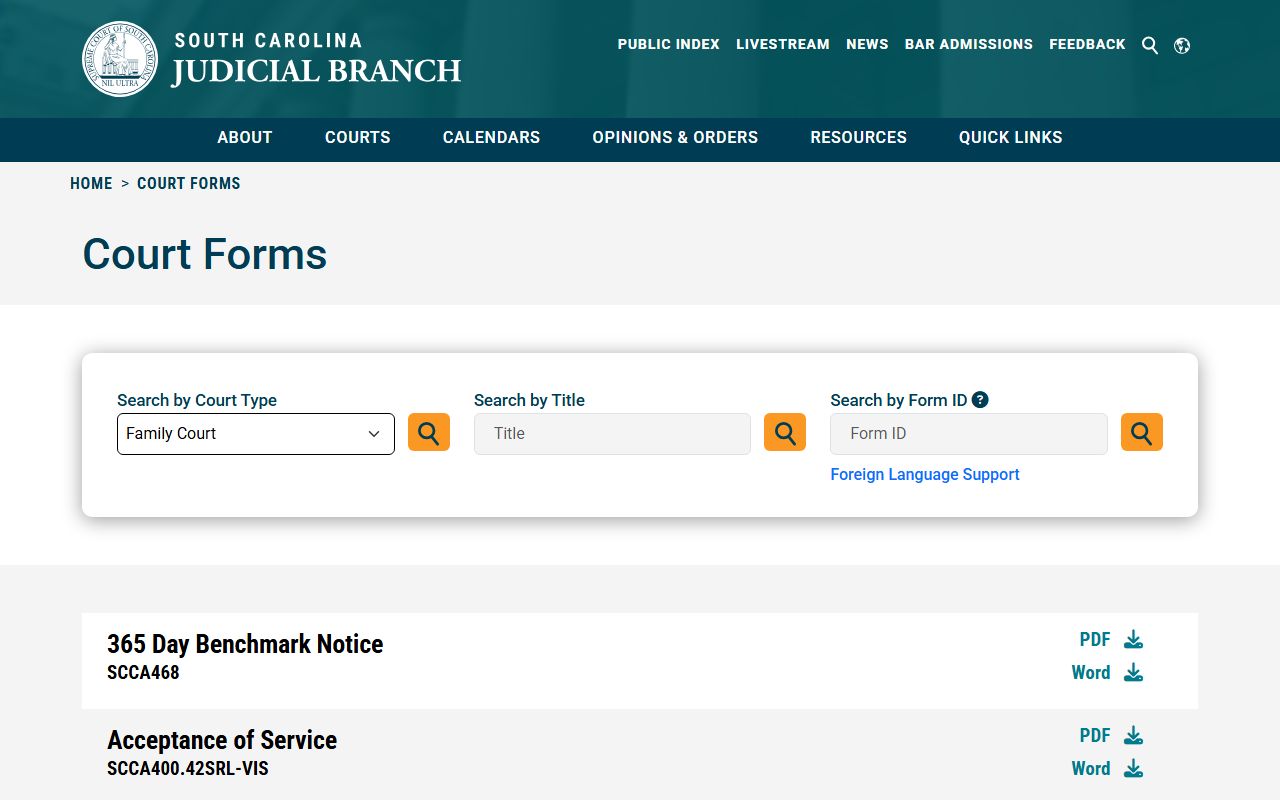 Forms are available in English, and select forms are also available in Portuguese and Spanish to assist non-English-speaking filers in South Carolina.
The SC Judicial Branch also publishes a court access FAQ page in both English and Spanish. The FAQ covers common questions about how to access family court records, what information is publicly available, and how to navigate the public index portals. The site is ADA compliant. Visit sccourts.org/resources/general-public/court-access to read the full FAQ for family court access in South Carolina.
The court access FAQ at sccourts.org answers questions about how to find and view family court case records across South Carolina's 46 counties. The SC Judicial Branch court access FAQ page answers common questions about Family Court records.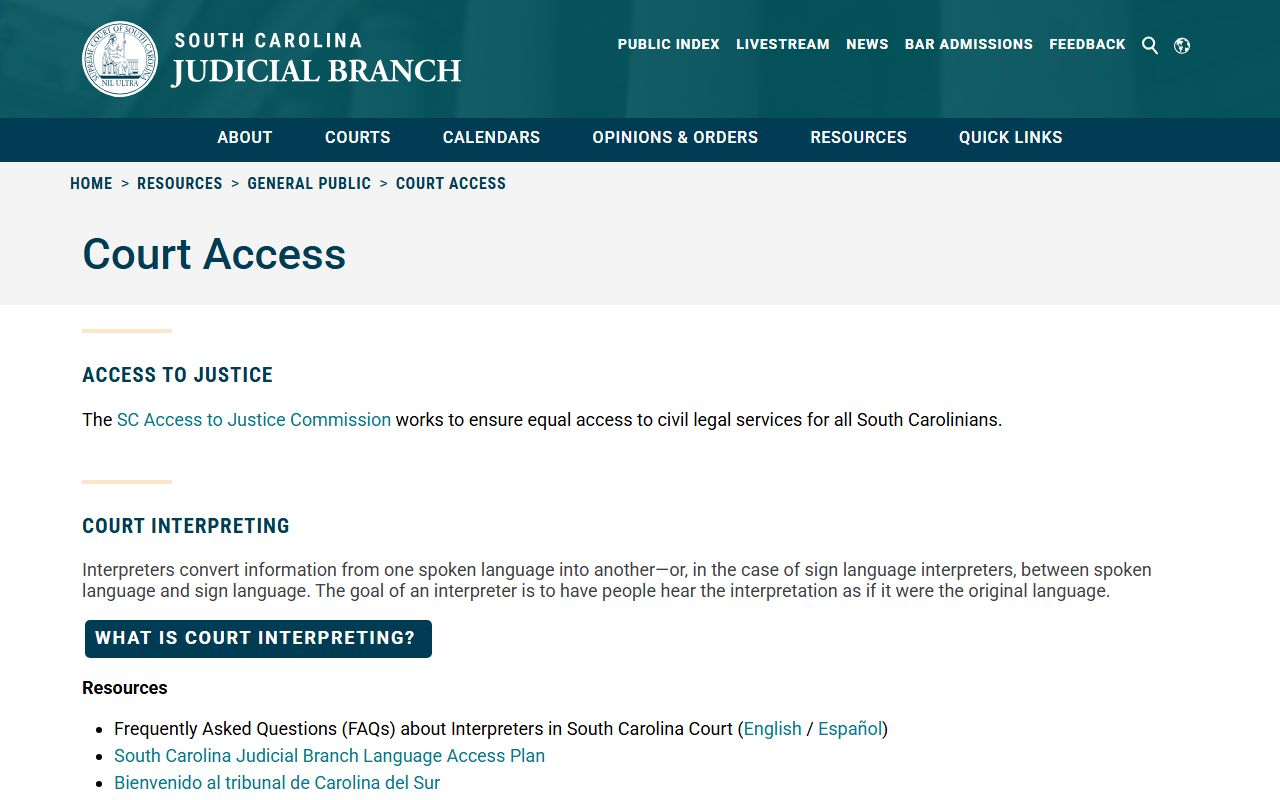 The FAQ is bilingual and covers both trial court and appellate court access for members of the public seeking case files in South Carolina.
Child Custody Laws in South Carolina Family Court
South Carolina law governs child custody through a set of statutes found in Title 63 of the South Carolina Code. The old "tender years doctrine," which favored mothers in custody cases, was abolished under S.C. Code Ann. § 63-15-10. Today, neither parent starts with an advantage based on gender. The court focuses on what is best for the child. Under S.C. Code Ann. § 63-15-230, the final custody determination must be based on the best interest of the child standard.
South Carolina uses 16 specific factors to determine the best interests of the child in custody cases. These factors are listed in S.C. Code Ann. § 63-15-240 and include the child's age, each parent's ability to meet the child's needs, the stability of each home, the mental and physical health of each party, the child's adjustment to home and school, and whether each parent supports the other's relationship with the child. A child's preference may also be considered under S.C. Code Ann. § 63-15-30, depending on the child's age and maturity. Domestic violence is a factor the court must weigh under S.C. Code Ann. § 63-15-40.
South Carolina Code Title 63 governs child custody, parental rights, and family court proceedings across the state. South Carolina Code Title 63 governs child custody and family court proceedings statewide.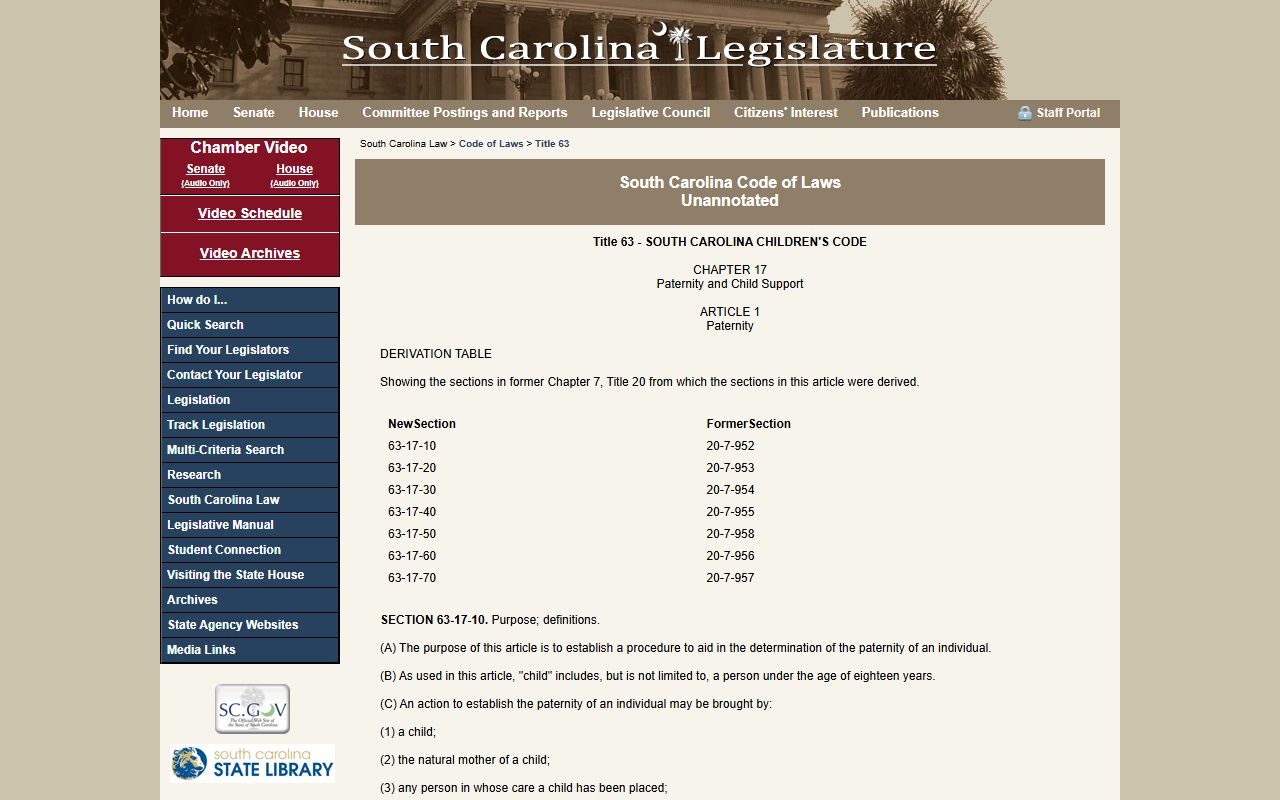 Title 63 covers not just custody standards but also adoption, child welfare, juvenile justice, and the full range of matters heard in South Carolina Family Court.
When custody is contested, South Carolina law requires both parents to submit parenting plans under S.C. Code Ann. § 63-15-220. Contested custody cases must also go through mediation. Under Rule 3 of the South Carolina Alternative Dispute Resolution Rules, both parties must participate in mediation when custody is at issue. Contested custody cases must be filed by an attorney. The court appoints a guardian ad litem to represent the child's interests in custody actions in South Carolina. Third parties such as grandparents may seek visitation rights under S.C. Code Ann. § 63-3-530(33) when a parent is deceased.
The SC Code Section 63-3-530 defines the full scope of Family Court jurisdiction, including third-party and grandparent visitation rights in South Carolina. SC Code Section 63-3-530 defines the full scope of Family Court jurisdiction in South Carolina.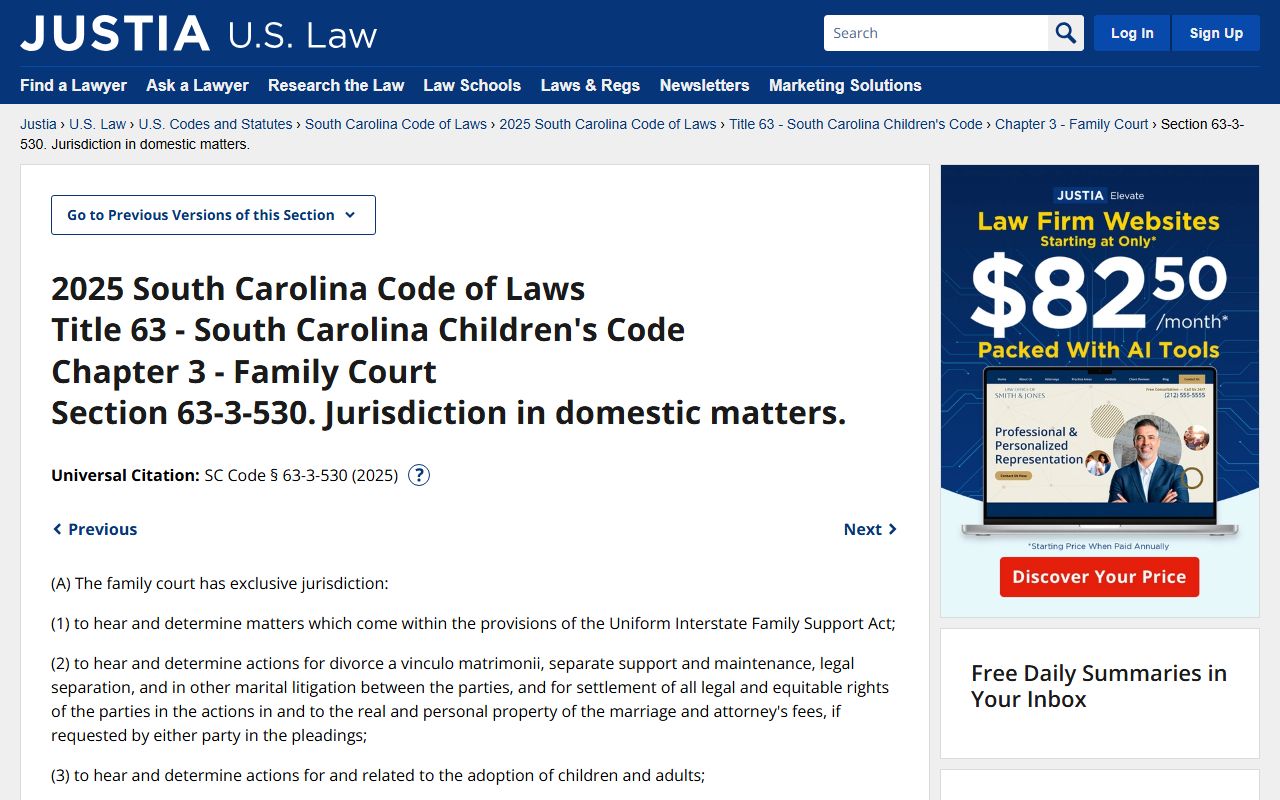 This statute is the primary authority for understanding what South Carolina Family Court can and cannot do when handling custody, support, and related case filings.
Child Support in SC Family Court Records
Child support orders are issued by the Family Court and become part of the official case record in South Carolina. The court has authority to establish, modify, and enforce child support under S.C. Code Ann. § 63-17-50. Support amounts are based on the South Carolina Child Support Guidelines, which consider each parent's income, the number of children, and the custody arrangement. All child support orders are enforceable through the court and through the state's enforcement agency.
The South Carolina Department of Social Services Child Support Enforcement Division helps parents establish paternity, set up child support orders, modify existing orders, and enforce payment. The division collects payments from the paying parent and distributes them to the receiving parent. Services are available to both custodial and non-custodial parents in South Carolina. You can reach the DSS Child Support Enforcement Division through their website at dss.sc.gov/child-support.
The SC Department of Social Services manages child support enforcement and distribution services for family court cases throughout South Carolina. The SC Department of Social Services Child Support Enforcement Division assists with support orders.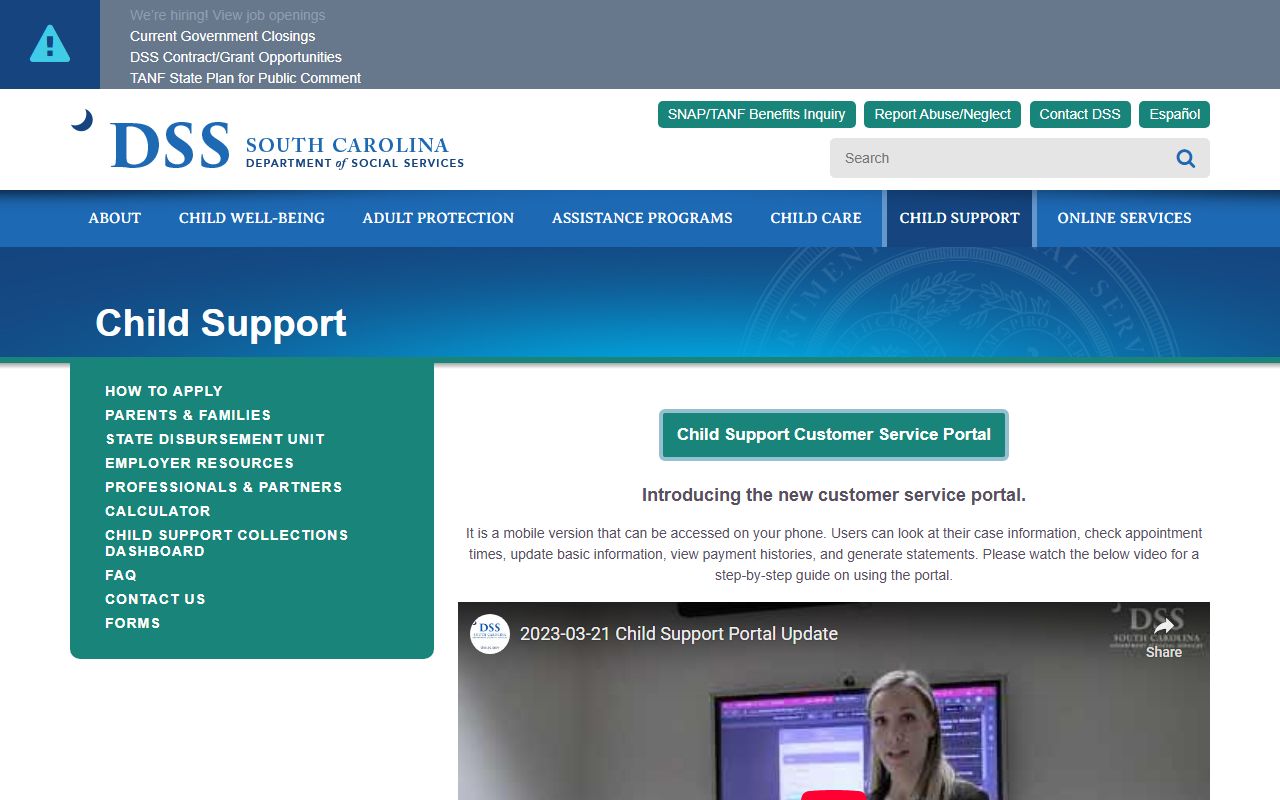 The DSS Child Support division coordinates with Family Court to enforce orders, track payments, and modify support amounts when circumstances change in South Carolina.
Getting Transcripts from SC Family Court Case Files
If you need a written transcript of a South Carolina Family Court hearing, you must request it from the court reporter who covered the proceeding. The process starts by completing Transcript Request Form SCCA 800, which is the official request form for all South Carolina courts. You must provide the court type, the county where the hearing took place, the docket number, the date or dates of the hearing, and the name of the presiding judge. The court reporter will acknowledge your request within five business days. After payment arrangements are made, the reporter has 60 days to prepare the transcript.
Instructions for requesting a transcript from South Carolina Family Court proceedings are published at sccourts.org. Court transcript request instructions are available through the SC Judicial Branch for Family Court proceedings.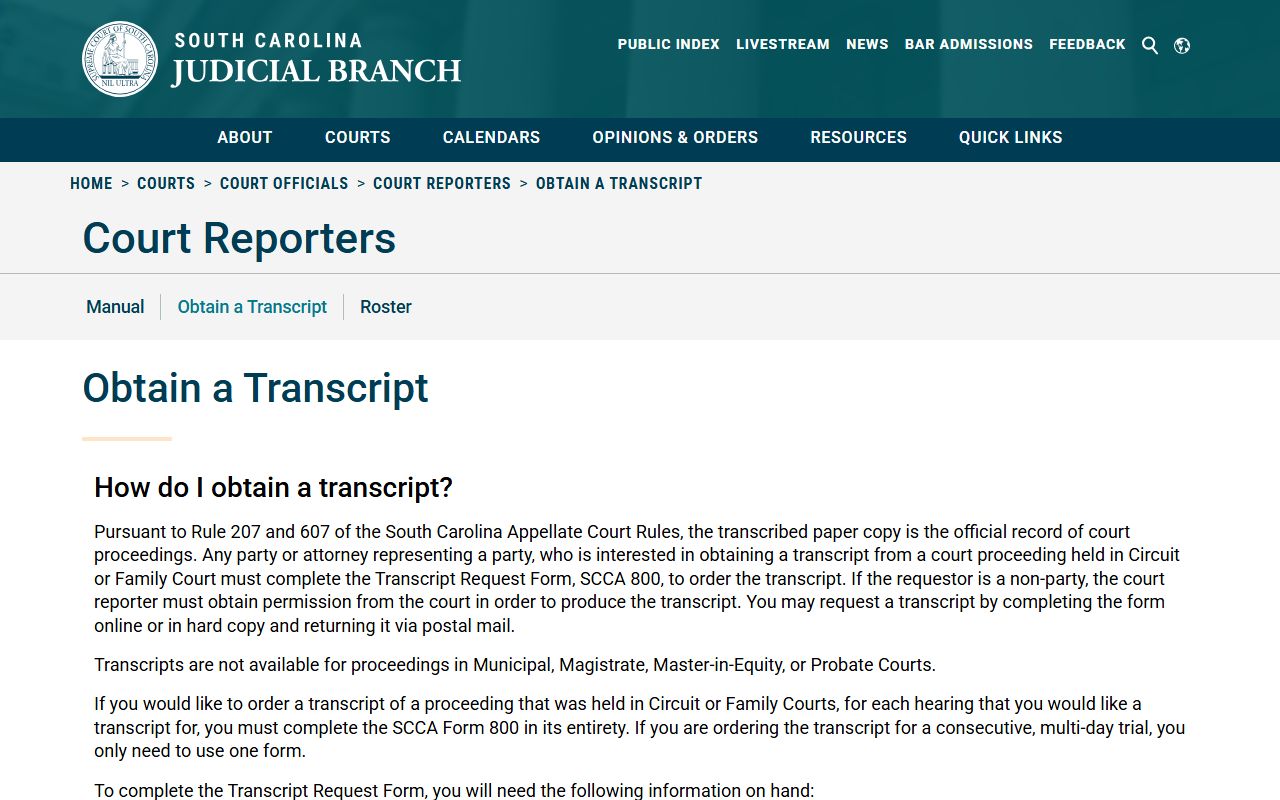 The transcript request page at sccourts.org includes the form and step-by-step instructions for ordering a record of any Family Court hearing in South Carolina.
Transcripts are not free in South Carolina. The full cost applies to all requestors regardless of income or indigent status. Most court reporters do not accept personal checks as payment. Contact the court reporter directly to find out their preferred payment method. The transcript request page at sccourts.org has further details on the process for family court cases in South Carolina.
Legal Help for South Carolina Family Court Cases
Finding an attorney is important for contested family court matters in South Carolina. The South Carolina Bar Association runs a lawyer referral service that can connect you with a family law attorney in your area. Call 803-799-7100 on weekdays between 9 a.m. and 5 p.m. to reach the referral line. You can also search the SC Bar Member Directory at scbar.org to find licensed attorneys who practice family law in South Carolina. The Bar's family law resources page at scbar.org/for-the-public/quicklinks/family-law offers additional guidance for people navigating family court.
The South Carolina Bar Association provides family law information and a lawyer referral service for people seeking help with family court cases. The South Carolina Bar Association provides family law information and lawyer referral resources. The Bar's public resources include a guide to finding qualified family law attorneys and information on what to expect in South Carolina Family Court proceedings.
People with limited income may qualify for free legal help through SC Legal Services. This nonprofit provides free civil legal assistance to low-income South Carolinians. Their services include family law matters such as custody, support, and protective orders. Call 1-888-346-5592 to reach the SC Legal Services intake line, or visit sclegal.org to find an office near you. Legal aid can help with both obtaining family court records and navigating active cases in South Carolina.
Note: Contested custody cases in South Carolina must be filed by a licensed attorney, so it is important to seek legal counsel before proceeding.
Public Access to South Carolina Family Court Records
South Carolina family court records are generally open to the public. The right to inspect public records is established under S.C. Code Ann. § 30-4-30, which is part of the South Carolina Freedom of Information Act. Any member of the public can request to view or copy court records held by the clerk of court in any of the 46 counties. You do not have to be a party to the case to access the public record in South Carolina.
Some information within family court case files may be restricted or redacted. Social Security numbers and financial account numbers are typically removed from public copies. Records involving minor children may have portions sealed from public view. A judge can order specific documents sealed if a party shows good cause. Sealed case files are not accessible through the public index portals. If you believe records you need are sealed, you may need to file a motion with the court to seek access in South Carolina.
The public index portals operate county by county. To search family court case records, go to sccourts.org/case-records-search, select your county, and proceed through the public index. The system is free to use and requires no account or login. As of January 2026, home address data is no longer displayed in the public index. For certified copies of documents from a case file, contact the clerk of court in the county where the case was filed.
Browse SC Family Court Records by County
Each of South Carolina's 46 counties has its own Family Court that keeps case records for cases filed in that jurisdiction. Select a county below to find local resources and contact information for family court records in that area.
Find Family Court Case Records by City
Residents of South Carolina cities file family court cases at their county courthouse. Select a city below to find family court records resources in that area.